

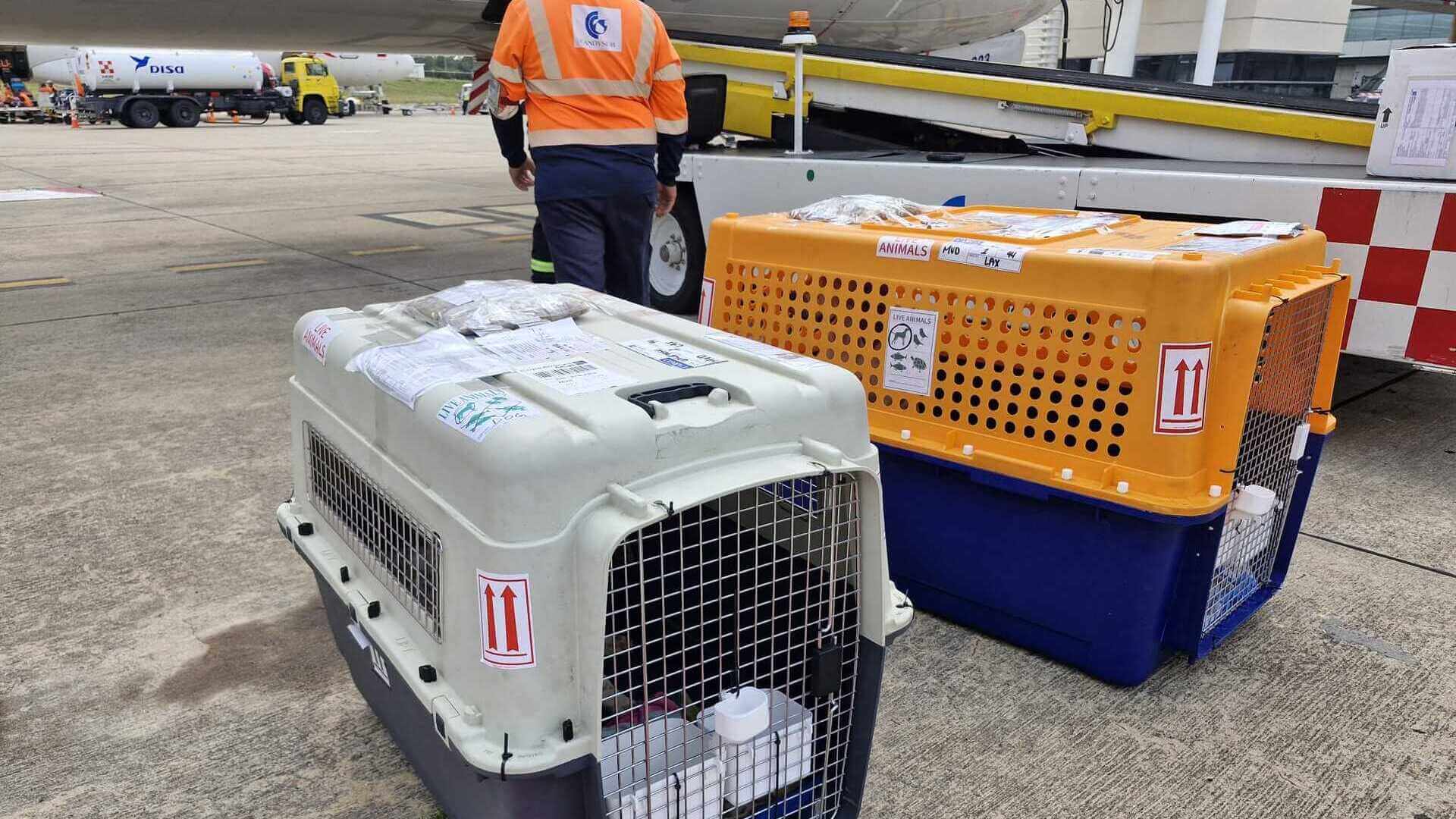
Airline-approved IATA travel crates prepared for international pet transport through cargo facilities.
Cost to Transport a Pet Internationally in 2025
One of the most common questions pet owners ask when planning a move abroad is: How much does it cost to transport a pet internationally? The honest answer: it depends on several factors — but this guide breaks down every cost component so you can budget accurately for 2025.
International pet relocation costs vary based on destination country, pet size, airline cargo fees, veterinary requirements, documentation preparation, and whether quarantine is required. At Across The Pond Pets, we help pet owners relocate dogs, cats, and other animals worldwide through our international pet shipping services.
2025 International Pet Transport Cost by Destination
The following ranges reflect typical total costs for professional full-service pet relocation from the USA — including airline cargo coordination, documentation preparation, and destination compliance. Costs are for one pet and do not include preliminary veterinary visits billed separately by your vet.
| Destination Region | Typical Cost Range (USD) | Key Variables |
|---|---|---|
| 🇨🇦 Canada | $1,500 – $4,000 | Rabies cert, health cert, relatively straightforward |
| 🇲🇽 Mexico | $1,500 – $4,000 | USDA endorsement, SENASICA import permit required |
| 🇬🇧 United Kingdom | $3,500 – $7,000 | Post-Brexit AHC, USDA endorsement, tapeworm treatment (dogs) |
| 🇪🇺 Europe (EU) | $3,500 – $7,500 | AHC + USDA endorsement, destination-specific permits |
| 🇲🇽 Central & South America | $2,500 – $6,500 | Country-specific import permits, varies widely by destination |
| 🇯🇵 Asia (Thailand, HK, Korea) | $4,000 – $8,500 | Import permits, titer test for some destinations |
| 🇯🇵 Japan / Singapore | $5,000 – $12,000+ | 180-day quarantine prep (Japan), mandatory quarantine (Singapore) |
| 🇦🇺 Australia / New Zealand | $6,000 – $12,000+ | Mandatory quarantine (~$2,000+ alone), titer test, strict import rules |
What You’re Actually Paying For: Cost Breakdown by Line Item
Understanding what drives the cost helps you budget accurately and evaluate quotes. Here are the main cost components for a typical international pet relocation from the USA.
| Cost Item | What It Covers | Typical Range (USD) |
|---|---|---|
| Airline Cargo Fees | Live animal cargo fee charged by the airline, based on crate dimensions and route distance | $500 – $3,000+ |
| IATA-Approved Travel Crate | Airline-approved crate sized correctly for your pet. See our crate size guide | $75 – $600+ |
| Veterinary Health Certificate | Issued by a USDA-accredited vet within 10 days of travel — vet fee varies by practice | $75 – $250 |
| USDA APHIS Endorsement | Official government endorsement required for most international destinations | $38 – $80 |
| Rabies Vaccination & Microchip | If not already current — must be done at correct timing before health certificate | $40 – $100 |
| Rabies Titer Test | Required for Japan, Singapore, Australia, NZ — tests effectiveness of rabies vaccination | $150 – $300 |
| Import Permits | Country-specific import permits required before your pet can enter. Varies widely. | $0 – $300 |
| Quarantine Fees | Mandatory for Australia, NZ, Singapore, Japan (if procedures not followed). Facility and government fees. | $1,000 – $3,000+ |
| Professional Relocation Fee | Our team’s coordination, documentation management, airline booking, and compliance oversight | $800 – $2,500 |
| Total Estimated Range | Varies by destination, pet size, and services required | $1,500 – $12,000+ |
Factors That Affect International Pet Transport Cost
Destination Country Requirements
Every country has its own pet import regulations including vaccination rules, blood tests, microchip requirements, and quarantine procedures. Japan and Australia are the most complex and expensive destinations due to strict quarantine requirements. Review our destination guides for country-specific rules.
Pet Size and Breed
Airline cargo pricing is calculated on crate dimensions and total shipment weight. A large breed dog in an XL700 crate pays significantly more in cargo fees than a small dog in a 200-series crate. Brachycephalic breeds (Bulldogs, Pugs, French Bulldogs, Persians) may be restricted from air cargo entirely — in those cases ground transport is required. See our dog travel services for breed-specific guidance.
Airline Cargo Fees and Route
Most pets traveling internationally fly as live cargo. Pricing is based on crate dimensions, gross weight, and route demand. Direct flights are always preferable — they reduce handling, minimize connection risk, and often cost less than routing through multiple hubs. Our team selects routes that optimize both safety and cost.
Crate Size and Cost
IATA-approved crates range from small in-cabin carriers (~$75) to extra-large cargo crates for giant breeds ($400–$600+). Reinforced crates for strong-jawed breeds or custom kennel requirements can exceed $600. See our crate size and guidelines guide for exact measurements by breed.
Veterinary Preparation and Timing
International travel typically requires vet visits for microchip verification, vaccination updates, health certificate issuance, and USDA endorsement. The health certificate must be issued within 10 days of travel — missing this window means restarting the process. Our documentation team coordinates all appointments to your departure date.
Documentation and Government Endorsements
Most international relocations require USDA APHIS endorsement of the health certificate, plus destination-specific permits. Some countries require additional certifications (import permits, consular endorsements). Our team manages all paperwork as part of the relocation service.
What Professional Pet Relocation Services Include
A full-service provider coordinates the entire relocation process — not just the flight booking. Here’s what’s included when you work with Across The Pond Pets:
- Dedicated relocation specialist assigned to your pet’s move
- Airline cargo selection and booking confirmation
- Health certificate coordination and USDA APHIS endorsement
- Import permit applications and compliance verification
- Correctly-sized IATA-approved travel crate guidance
- Quarantine preparation and facility coordination (where required)
- Travel timeline planning and departure checklist
- Regular updates throughout the journey
DIY Pet Transport vs Professional Relocation Services
| DIY Transport | Professional Relocation (Across The Pond Pets) |
|---|---|
| Owner manages all documentation, timelines, and government endorsements | Specialists coordinate all paperwork, timing, and USDA endorsements for your departure date |
| Must navigate airline cargo systems and live animal policies independently | We book cargo space directly with vetted airline partners experienced with live animals |
| One documentation error can result in quarantine, return, or significant additional cost | Full compliance verification — significantly reducing risk of delays or denied entry |
| No support during travel if issues arise at airport or customs | Active coordination throughout the journey with updates at key checkpoints |
| Lower upfront cost — but higher risk of expensive mistakes | Higher upfront cost — lower overall risk of costly errors, delays, or quarantine |
Military Pet Relocation Costs
Active-duty military families relocating under PCS orders often face tight timelines and strict destination-specific requirements. Germany, Japan, Korea, and Italy all have specific import rules that must be navigated carefully. Across The Pond Pets offers specialized military pet transportation services designed for service members moving internationally — with priority scheduling and destination expertise.
Preparing Your Pet for International Travel
Early preparation is the single most effective way to control costs and avoid expensive last-minute complications. Rushing the process — especially for destinations like Japan that require a 180-day waiting period after a titer test — can make an international move impossible on your timeline.
Before your pet’s travel date, review our International Pet Departure Checklist.
Frequently Asked Questions
How much does it cost to transport a dog internationally in 2025?
Most international dog relocations range from $3,000 to $10,000+ depending on destination, crate size, airline cargo fees, and veterinary preparation. Destinations with strict quarantine requirements like Japan, Australia, and New Zealand are at the higher end, often exceeding $10,000 when all quarantine facility fees are included.
Why is international pet transport so expensive?
The cost reflects several specialized services: airline live animal cargo fees (based on crate dimensions and route), IATA-approved crates, veterinary health certificates and USDA government endorsements, country-specific import permits, quarantine facilities where required, and the expertise of professionals who ensure your pet meets every destination requirement. A single documentation error can result in quarantine costs that exceed the service fee many times over.
Is transporting a pet to Japan or Australia more expensive than other destinations?
Yes — significantly. Japan requires a 180-day waiting period after a successful rabies titer test before your pet can enter without quarantine. If procedures are not followed precisely, pets face up to 180 days of quarantine at the owner's expense. Australia mandates a minimum 10-day quarantine for all incoming pets, with facility fees typically $1,500–$3,000+. Both destinations typically cost $6,000–$12,000+ for the complete move.
Do pets travel in airplane cargo? Is it safe?
Yes. Most international pet travel occurs through airline cargo departments where pets travel in the climate-controlled, pressurized lower deck of the aircraft — not in an uncontrolled hold. Airlines have strict live animal acceptance protocols. Our team selects airlines and routes with the best live animal handling records and minimizes connection points to reduce handling stress.
How much does a travel crate cost for international pet transport?
IATA-approved travel crates range from $75–$150 for small in-cabin carriers to $400–$600+ for large and extra-large cargo crates. Custom or reinforced crates for certain breeds can exceed $600. The crate must allow your pet to stand, turn, and lie down comfortably. See our crate size guide for measurements by breed and weight.
How far in advance should I plan international pet travel?
For most European and Latin American destinations: 6–8 weeks minimum. For Japan and Singapore: 6–8 months minimum due to titer test requirements and waiting periods. For Australia and New Zealand: 4–6 months. Starting early is the single most important factor in controlling cost — rushed moves are always more expensive and carry higher risk of documentation errors.
Does pet insurance cover international transport costs?
Standard pet health insurance policies typically do not cover international transportation costs. Some specialized travel insurance policies for pets may cover emergency veterinary care during travel, but transport fees, documentation, and quarantine costs are generally out-of-pocket. Check your specific policy before departure.
What is included in Across The Pond Pets’ service fee?
Our service fee covers: dedicated relocation specialist, airline cargo selection and booking, health certificate and USDA endorsement coordination, import permit applications, compliance verification, crate guidance, quarantine preparation where required, and regular updates throughout the journey. Airline cargo fees, crate purchase, vet fees, and government endorsement fees are billed as direct pass-through costs at cost price.
Get a Personalized Pet Relocation Quote
Every relocation is unique. Tell us your pet’s species, destination, and timeline — we’ll review airline options, crate requirements, and veterinary needs to provide an accurate estimate.
Request a Pet Relocation Quote